Check out this website I found at ow.ly
I'm interested in this. If there is a sailboat out there that can handle this trip, then sign me up. Looks huge too. Is it plexiglass that covers the deck? Want to know more.
I'm interested in this. If there is a sailboat out there that can handle this trip, then sign me up. Looks huge too. Is it plexiglass that covers the deck? Want to know more.
This is cool. Know it's old, but it still has a great impact. Like the shots of Lou with his long hair and the stills integrated with the shots of the monitor. It's low-fi feel really works with the music and the trip-out session in the middle with the heart is precious. "'You can feel anything you wanna feel, and call it real...." is just a smidgen of those lyrics that still ring so true, years later. Sebadoh lives on.
So interesting that Domino is releasing this now. Like it a lot.
This film is good. It's shot in a little town in northwest CT, Norfolk, and I learned about it while staying at the white house in the opening clip of the trailer this summer. My friends Ariadna and Chip held a dinner party there this summer and Grady Cooley, the production designer was in attendance.
He told us about the production of the film and I kept my eyes open for it. The dialogue is what is interesting about this film as it's modern chatter really keeps you guessing about what will happen next. It's unpredictable and fresh with the exceptional leads, Adam Scott as Caleb and Brittany Snow as Emma. Their chemistry is what carries your interest as well as exceptional acting and direction. Sparks seem to fly off these two impressive actors.
Those of you watch HBO may recognize Adam Scott from the one season series, Tell Me You Love Me, but he's much more interesting here. Grady described some of the details of the production and I'm glad that I met him for some of that insider info on what it was like for Scott and Murphy in person. Grady described the space the director, the up and coming Lee Toland Krieger, gave to Snow when she needed to do a masturbation scene and how the obviously helped in the final reaization of the scene.
Mark is doing a great job capturing the support the IOM is giving remote communities in need in Haiti. His shots are excellent, and his storytelling is clear and concise. Like the contrast between the montages and the interviews with people 'on the ground'. This is what I want with this type of reportage. Not long, but worth it to learn more about what's happening there one month in.

Finished reading this Sam Shepard profile in the New Yorker from last week-need to read more of his plays it seems. Loved the 2005 film, Don't Come Knocking directed by Wim Wenders. Seemed like a scene in that film, where a young man is sitting outside a building on a couch that seems like it's been thrown out the window is purely from the life of Shepard, but who knows. Amazing playwright of course, but the enigma is shown when you see him on camera. Fabulous actor and those piercing eyes leave you thinking.

Zack and I had heard that her "Heartbreak Show" was something to experience and were both infused with renewed love of her music and style. Syd blew everyone away with her personality-taking requests and bringing up friends in the audience to perform. There's nothing like the lady Syd Straw!
This is nice. Saw this guy's photos on Flickr-don't know how I found him except he probably made a comment on one of my photos. I like this slide show a lot. The sound of the trains is very cool too, but I am a sucker for a good ambient soundtrack. Takes me there. Some of these photos are really lovely and then of course, I love seeing regular people in Italy. Best of my recent discoveries on Flickr lately. Love seeing people on trains with their eyes closed. We have all been there.
Made him a contact so I can learn more. 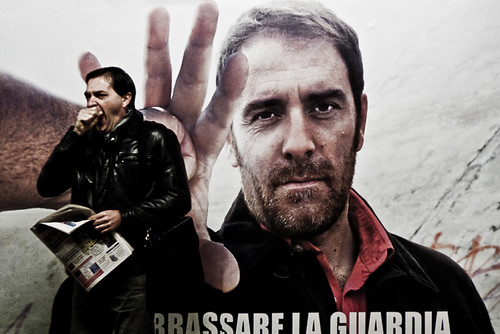
I think this shot above is stunning. Nice work!
Somehow, I like this one. Neat camera stuff and the song's beat and sound is cool. Don't know about the levitating guys, but it's working for me. Like it enough to watch again- a few times even.
My friend Gerald DeCock is working on this independent feature so here is a look. He's doing art direction and hair and is an artist living in the Chelsea Hotel-a favorite all around talent really. But, this looks intriguing and I think the lighting and design are really nice to look at. Her hair looks fab too so I attribute it to Gerald of course. I think I saw a short that this was based on and liked that, but didn't see it on the Matthew Collins Vimeo channel so maybe it's somewhere else. It's got lovely production value, lighting and a picturesque actress, but of course, I wonder what is going on. Need more to really understand what this film is all about.
In contrast, I saw Memento (2000) last night and was blown away by the acting of Guy Pearce and the storytelling of Christopher Nolan. The tortured Lenny, trying to find the truth, is excruciating to watch in his twists of personality and tics. Just the way he adjusts his shirt inside his ill-fitting jacket, tells us so much about his character. At 20 minutes in, he is remembering his wife and at that moment, his face softens, he is experiencing a realness that he rarely lets himself go to. But the writing and direction by Nolan is what orchestrates the magic. The confusion the viewer feels at this perfect non-linear story uses filmis language to absolute full-effect. At 34 minutes in, it's fabulously sexy where Natalie played by Carrie-Anne Moss, explores Lenny's damaged frame. But it's the whole package- the twists and turns of the plot that is impeccable in it's full immersive experience. The action gets more intense exponentially and we are thrilled in feeling that we have never been fooled this way by film. Nolan reinvented the filmic language here with his perfect 'anti' time-based character, Lenny- who has no short-term memory- just what are who are we to believe? Later at 1 hour 29 minutes in, we see a flash frame of Lenny as Sammy, and it signals that something is not quite right with this picture. Look for it, as I had to go back while watching Netflix as it was literally a frame or two that was subbed in while Sammy is sitting in an asylum. Just a perfect filmic experience that titillates while showing off the impressive talent of Nolan and Pearce. See it if you already haven't.
Ego Sensation has made a smoking hot new video to promote White Hills upcoming Spring tour through Europe. The video is fabulous for a number of reasons. It is extremely well-lit, thematically slick and hysterical- all at the same time which is not easy to accomplish in under 2 minutes . Love the concept, shots and well, the whole package will undoubtedly excite fans and more. Can't wait for the record release party on February 18th. Get ready!
New Marlborough, Mass.
THE Obama administration is planning some big changes to how we measure the success or failure of schools and how we apportion federal money based on those assessments. It’s great that the administration is trying to undertake reforms, but if we want to make sure all children learn, we will need to overhaul the curriculum itself. Our current educational approach — and the testing that is driving it — is completely at odds with what scientists understand about how children develop during the elementary school years and has led to a curriculum that is strangling children and teachers alike.
In order to design a curriculum that teaches what truly matters, educators should remember a basic precept of modern developmental science: developmental precursors don’t always resemble the skill to which they are leading. For example, saying the alphabet does not particularly help children learn to read. But having extended and complex conversations during toddlerhood does. Simply put, what children need to do in elementary school is not to cram for high school or college, but to develop ways of thinking and behaving that will lead to valuable knowledge and skills later on.
So what should children be able to do by age 12, or the time they leave elementary school? They should be able to read a chapter book, write a story and a compelling essay; know how to add, subtract, divide and multiply numbers; detect patterns in complex phenomena; use evidence to support an opinion; be part of a group of people who are not their family; and engage in an exchange of ideas in conversation. If all elementary school students mastered these abilities, they would be prepared to learn almost anything in high school and college.
Imagine, for instance, a third-grade classroom that was free of the laundry list of goals currently harnessing our teachers and students, and that was devoted instead to just a few narrowly defined and deeply focused goals.
In this classroom, children would spend two hours each day hearing stories read aloud, reading aloud themselves, telling stories to one another and reading on their own. After all, the first step to literacy is simply being immersed, through conversation and storytelling, in a reading environment; the second is to read a lot and often. A school day where every child is given ample opportunities to read and discuss books would give teachers more time to help those students who need more instruction in order to become good readers.
Children would also spend an hour a day writing things that have actual meaning to them — stories, newspaper articles, captions for cartoons, letters to one another. People write best when they use writing to think and to communicate, rather than to get a good grade.
In our theoretical classroom, children would also spend a short period of time each day practicing computation — adding, subtracting, multiplying and dividing. Once children are proficient in those basics they would be free to turn to other activities that are equally essential for math and science: devising original experiments, observing the natural world and counting things, whether they be words, events or people. These are all activities children naturally love, if given a chance to do them in a genuine way.
What they shouldn’t do is spend tedious hours learning isolated mathematical formulas or memorizing sheets of science facts that are unlikely to matter much in the long run. Scientists know that children learn best by putting experiences together in new ways. They construct knowledge; they don’t swallow it.
Along the way, teachers should spend time each day having sustained conversations with small groups of children. Such conversations give children a chance to support their views with evidence, change their minds and use questions as a way to learn more.
During the school day, there should be extended time for play. Research has shown unequivocally that children learn best when they are interested in the material or activity they are learning. Play — from building contraptions to enacting stories to inventing games — can allow children to satisfy their curiosity about the things that interest them in their own way. It can also help them acquire higher-order thinking skills, like generating testable hypotheses, imagining situations from someone else’s perspective and thinking of alternate solutions.
A classroom like this would provide lots of time for children to learn to collaborate with one another, a skill easily as important as math or reading. It takes time and guidance to learn how to get along, to listen to one another and to cooperate. These skills cannot be picked up casually at the corners of the day.
The reforms suggested by the administration on Monday have the potential to help liberate our schools. But they can only do so much. Our success depends on embracing a curriculum focused on essential skills like reading, writing, computation, pattern detection, conversation and collaboration — a curriculum designed to raise children, rather than test scores.
Susan Engel is a senior lecturer in psychology and the director of the teaching program at Williams College.
Sign in to Recommend Next Article in Opinion (26 of 29) » A version of this article appeared in print on February 2, 2010, on page A27 of the New York edition.
I thought this was very interesting. If only all of our children were taught to think critically instead of learning to take tests and worksheets. Since I am not officially even in the elementary school "game" yet, it will be 'educational' to learn about what Natalie's kindergarten class will be all about next year. Incidentally, I do have a second cousin who took her teenage boys out of middle school and high-school a few years back because she didn't see them as knowing how to think for themselves. Hopefully it helped.
We love the Montessori-Bank Street Method of learning that our preschool teaches, but it feels like we are now living in a little bubble. Will public school in NYC be able to maintain this start our kids are getting? Curious and intrigued. Hopefully, this 'dream' that Susan Engel writes about here can become a reality with new fresh thoughts on education in the US.


